
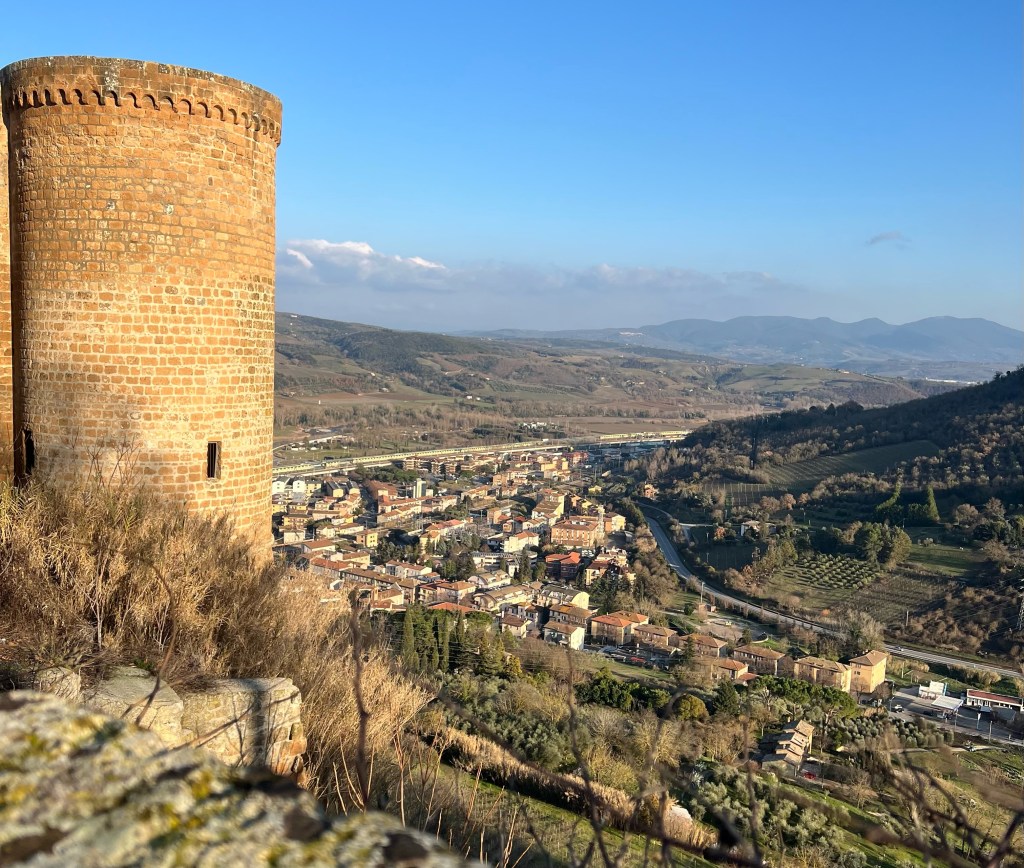
This semester, I am taking a course that is only offered in Rome at my University. The class is titled “Italian Culture: Food and Wine”, who wouldn’t want to take it? A couple weeks ago, we had to do an eight-minute presentation on a region in Italy and talk about their land, terroir, food and wine.
I was given the Umbria region which is found above Lazio – the region that Rome sits in and this is all the good stuff I learned in my hours of research! So sit back and enjoy a little knowledge dump on the region of Italy that is home to interesting food habits and great wine: Umbria.
BASIC FACTS
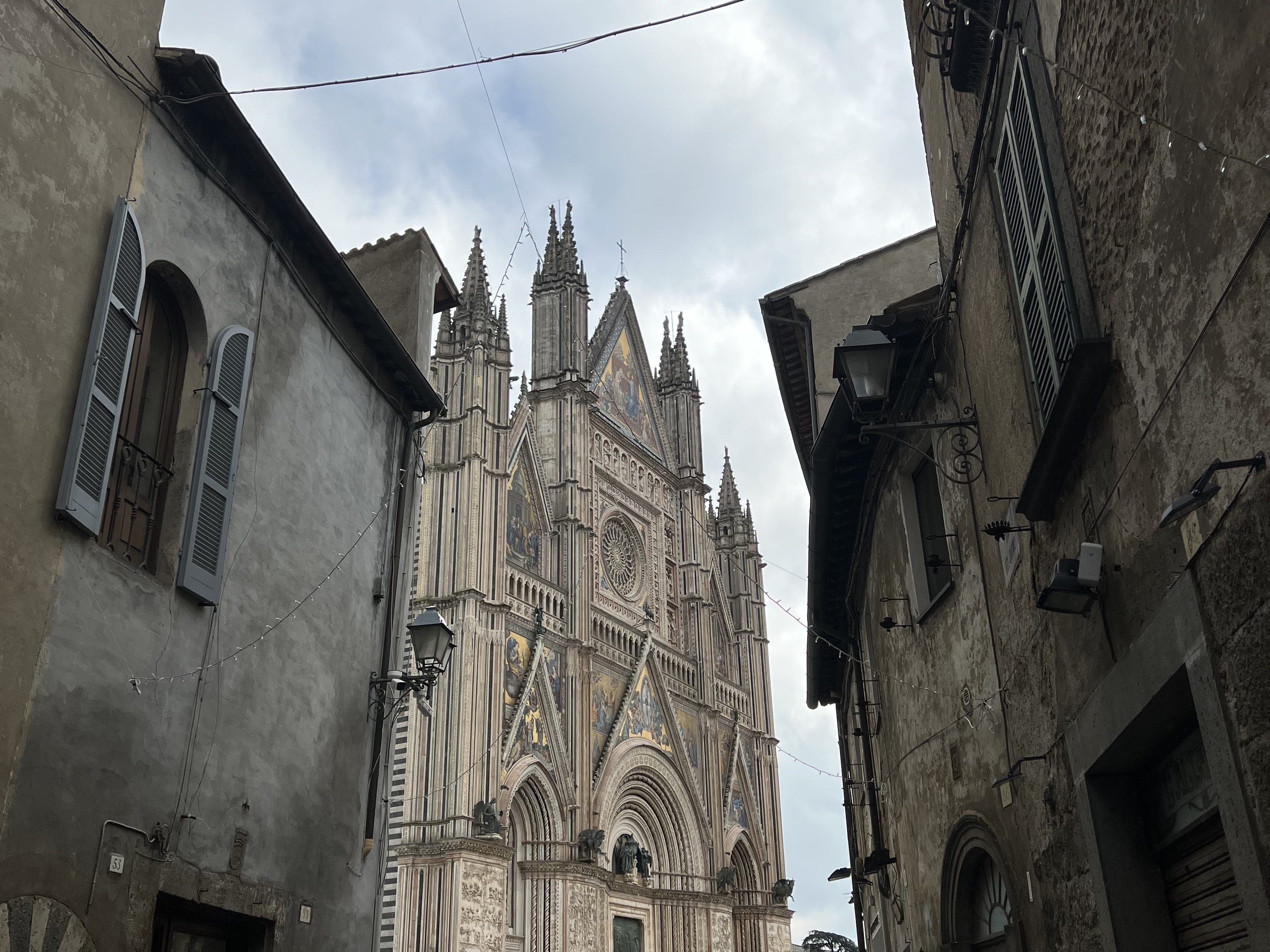
Umbria is located in central Italy and borders three different regions: Tuscany, Lazio and Le Marche. Some notable cities in this region are the capital – Perugia and Orvieto, Assisi and Terni. The name “Umbria” comes from the Umbri tribe that settled in this area in the 6th Century B.C. but there are artifacts that have been found that date back to the Bronze and Iron ages so the Umbri tribe was not the earliest settlement. Although it is the fourth-smallest region in Italy, it is known for the biggest Jazz Music Festival called “Umbria Jazz” and the fourth-largest lake in Italy, Lake Trasimeno – which will come into play a little later.
LAND AND TERROIR
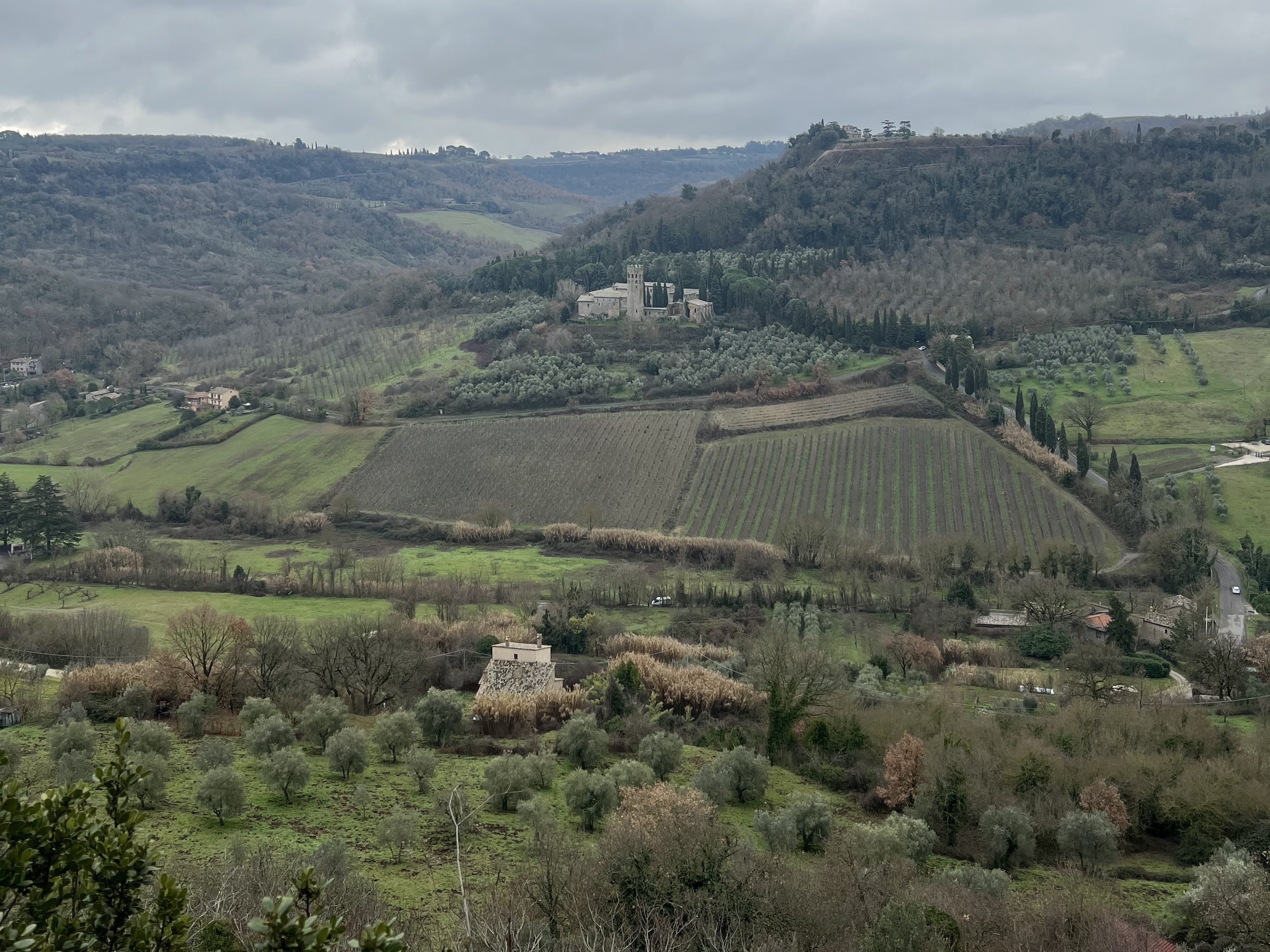
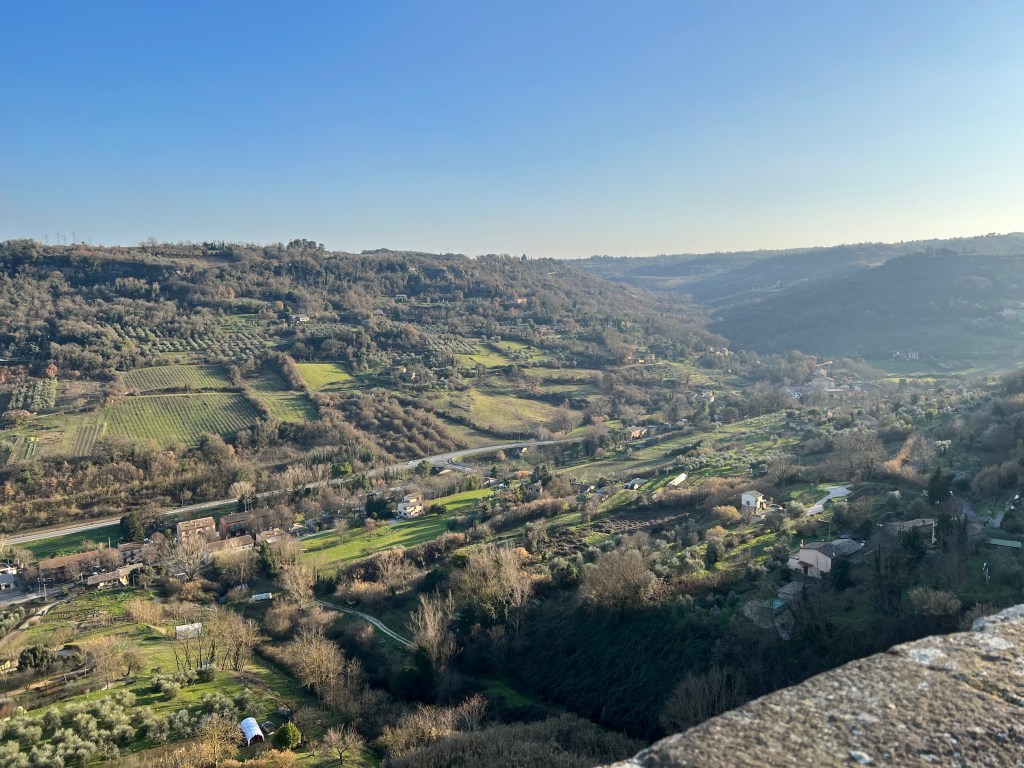
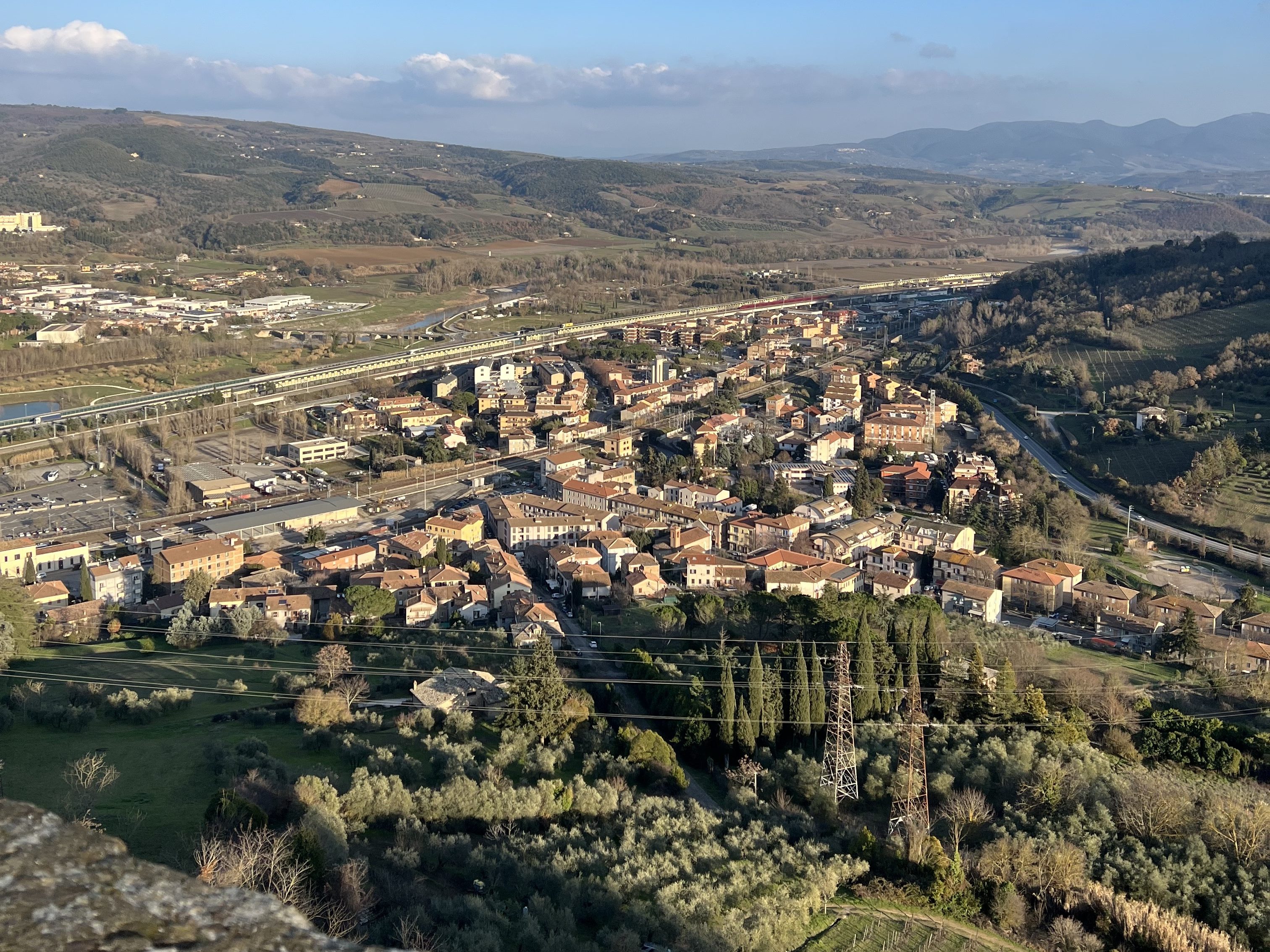
Umbria is landlocked so it is the only central Italian province that doesn’t have a seacoast but it is full of great agricultural areas. It is filled with wooded hills, vineyards, olive groves, meadows, rivers and lakes – it is actually known as the “green heart of Italy”. A majority of the population are contadini (farmers) and artisans that pride themselves on carrying down traditions that were handed down to them by their Etruscan and Roman forefathers. Some of these treasured traditions are agriculture, winemaking and especially gastronomy.
Geographically speaking, Umbria is full of many hills which are unsuitable for tilling of crops but great for taming goats and sheep. Due to this trait, the region favors cheeses made from sheep milk. The region’s climate is consistent with continental climates since it’s landlocked which means hot summers, cold winters and rainy autumns. This region is full of many natural resources like two major lakes, Lake Trasimeno and Piediluco. These lakes are the main source of fish for the region and shape the life surrounding it, especially eating habits. They both share plenty of trout, perch and freshwater gray mullet for the region. Lake Trasimeno also produces eels and lasca which is a European roach and is considered a delicacy.
FOOD
Umbria has quite a few local specialties but we’re only going to touch on a few. For starters, it is a meat-raising region and pigs are very common, especially in the Tiber Valley so Pig and Wild Boar are fairly common in their dishes, especially those in certain cities. For example, Prosciutto di Norcia, a local classic, is named after the city of Norcia. Wild Boars are in regression right now but are not completely wiped out but the upland produces the most game. There is a great variety from community to community about how to cook the suckling pig. Perugia is heavy on salt and pepper while some other cities use peppermill, rosemary and fennel – which is a favored seasoning in Umbria.
Another Umbrian specialty is truffles, more specifically black truffles. Two cities produce a majority of the region’s truffles. Spoleto was the favored city for a while, especially by the Popes of earlier centuries but then Norcia began to produce some and are even known for having a “truffle festival” in November. Extra-Virgin Olive Oil, a true Italian classic, is also popular in this region and although it’s unknown to most, Umbria actually produces the highest percentages of Extra-Virgin Olive Oil in Italy. This Italian staple is harvested near Lake Trasimeno and the slope of the hills between Assisi and Todi. Finally, Flap and Honey mushrooms are grown in the shade of beseech and chestnut trees in this region and can be found in many of their dishes.
DISHES
Now that we know the local specialties in the Umbria region, we can look at a few popular dishes found within this community. For starters, it is evident that since this region is so close to other regions like Lazio, we can see a similarity in dishes that have crossed over. For example, Porchetta, a stuffed savory boneless pork originated in Lazio but is found in Orvieto and other nearby cities. This dish is usually stuffed with liver, fennel, fat and skin.
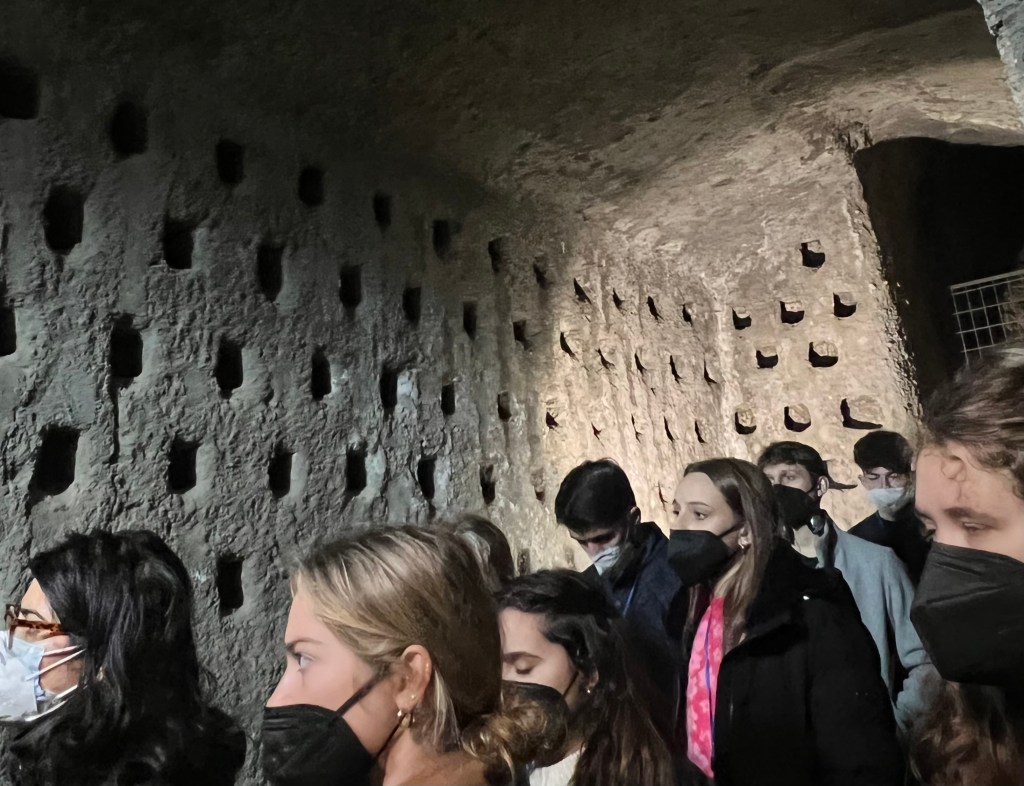
Looking at Orvieto specifically, pigeons are a popular protein and are considered a delicacy in the Terni province in general. In Orvieto, the town has thousands of caves under its city and in these man-made caves, they use a section of it to harvest pigeons. The seasonality of pigeons is November to December and February to March so at this time, it is a more common dish but isn’t eaten as much as it was in the past centuries.
Aside from these major dishes, there are many more we could touch on but only a few will do for now. Pasta Alla Norcina, which is found mainly in the city of Norcia contains regional specialties like black truffles and olive oil but also adds anchovy filets. Finally, snails are yet again, another popular protein that is eaten mainly in Foligno and is typically served as a second course. Like most Italian meals, the second course is usually meat and is served after the first course, pasta. Since snails hibernate in the winter months they are more available in the summer.
WINE
Now onto my favorite part, wine! The Umbrian region has three notable sources of wine that have grown in popularity within Italy. Before we jump into these three key contributors, let’s talk about some basic details about the region’s wine as a whole. With the cool breeze from the Appennine, you’ve got a classic push and pull of air and this helps to even the ripening of grapes. Also, along the western edge of the region, in Lake Corbara and Trasimeno, there are bruins of ancient volcanoes, and the vines are forced down through clay and limestone into a hard, mineral-rich volcanic soil and this enhances the quality of the wines. Umbria is also ranked 6th in Italy for producing *DOC wine.
(*DOC wine- DOC stands for Designation of Controlled Origin and is a high honor to earn. If a wine has this on its wine bottle, it means it is the second-highest quality level you can get. The first is DOCG which stands for Denominazione di Origine Controllata e Garantita, which means “Designation of Controlled Origin and Guaranteed”. Although this is the highest level you receive, getting a DOC classification is still a big deal.)
The most notable city for white wine is Orvieto as it remains the anchor of the Umbrian wine scene since the middle ages. This city produces 70% of all the region’s DOC-classified wine. They are most known for a dry, transparent pale yellow colored wine that is cool and clean with only hints of apple and green melon with a crisp, minerally finish but is said to be “too light” and can’t excite a palette.
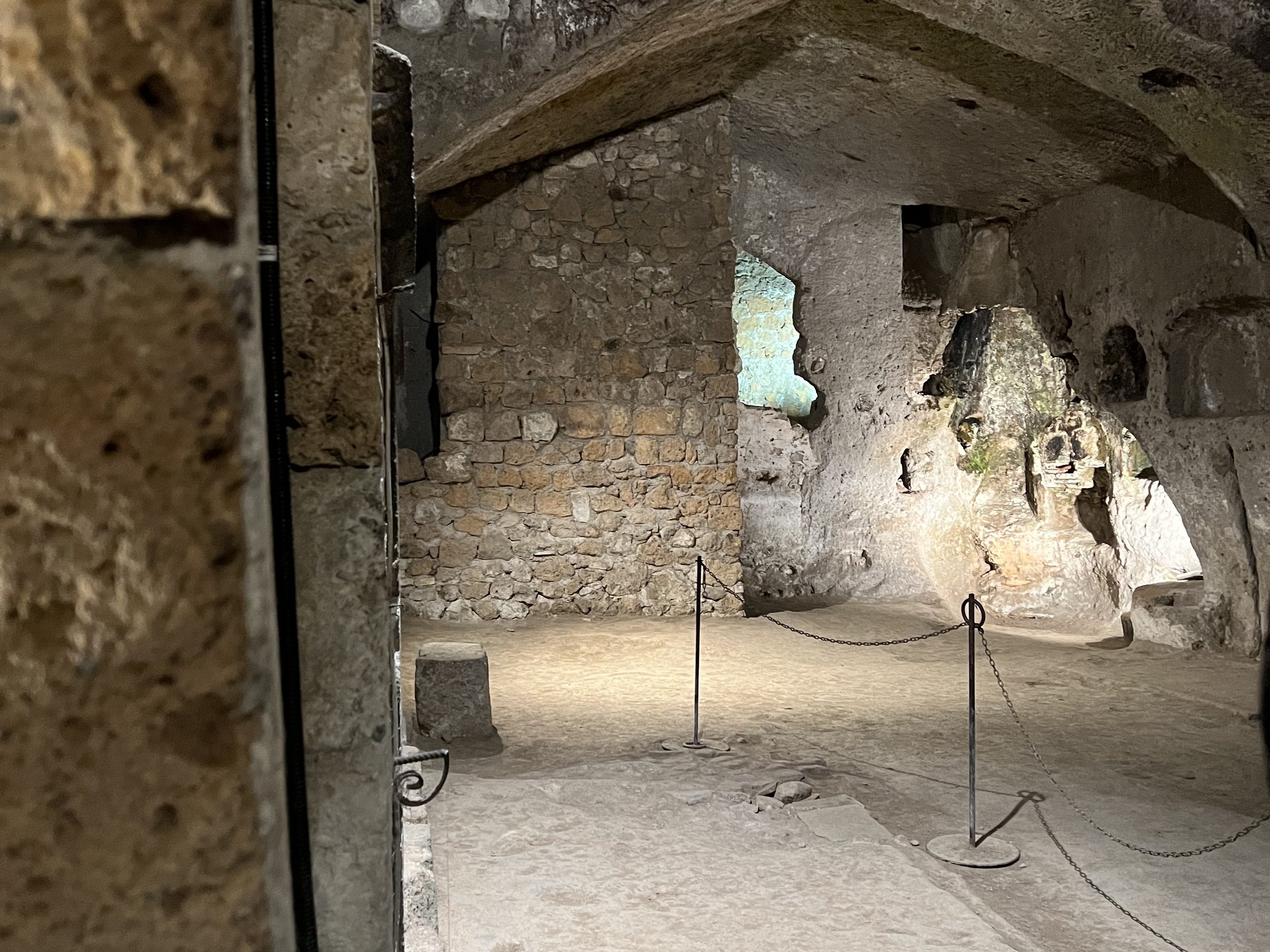
To make this wine, the Orvietians use Trebbiano and Sauternes grapes and the underground caves that are found under the city are full of volcanic rocks and this helps the grapes to rot and ferment perfectly. The most popular kind found in this city is Vino Santo.
As far as wine goes, we have two notable contributors: the Lungarotti family and Montefalco.
The Lungarotti family is located in the city of Torgiano and unlike Orvieto who has been producing their wine since the middle ages, this family started producing wine more recently in the 1960s but has made quite a name for themselves. This family has a winery, hotel, restaurant, wine shop and assorted museums and produces 2.5 million bottles per year. Their most popular product is “Torgiano Rosso Riserva”
Finally, we have Montefalco which is a town near Torgiano. This town has a small community of winemakers that’s known for making Italy’s favorite type of wine, a rich and spicy, full-bodied kind. This is another example of a DOC classified wine that gained this title in 1979 for their wine made 100% with Sagrantino grapes which is why this small town’s most popular product is “Montefalco Sagrantino”.
The Umbria region is a great place to explore if you are in Italy and is just above the most popular Region of Lazio. Full of interesting dishes, great local specialties, perfectly made wine and lots o history, this region is a great place to understand the food and wine culture of Italy.
SOURCES:
Bastianich, Joseph., and David Lynch. Vino Italiano : the Regional Wines of Italy. 1st ed., Clarkson Potter, 2002.
Freson, Robert., et al. Savoring Italy. 1st ed., HarperCollins Publishers, Callaway Editions, 1992.
Kosti︠u︡kovich, Elena. Why Italians Love to Talk About Food. 1st American ed., Farrar, Straus and Giroux, 2009.
O’Keefe, Kerin. “A Deep Dive into the Red Wines of Italy’s Umbria.” Wine Enthusiast, 17 Sept. 2019, https://www.winemag.com/2019/09/17/red-wines-umbria-italy/.
Root, Waverley Lewis. The Food of Italy. Vintage Books ed., Vintage Books, 1992.
 GROW WITH SARAH GRACE
Leave a comment